
Mid-Winter Home Check-In: Early Warning Signs Calgary Homeowners Should Understand
Most major home repairs don’t start as sudden failures — they begin as subtle changes. A mid-winter check-in is about recognizing those early signals before spring thaw accelerates damage.
Below is a practical diagnostic checklist of what to watch for during the heart of winter.
Exterior & Roof Signals
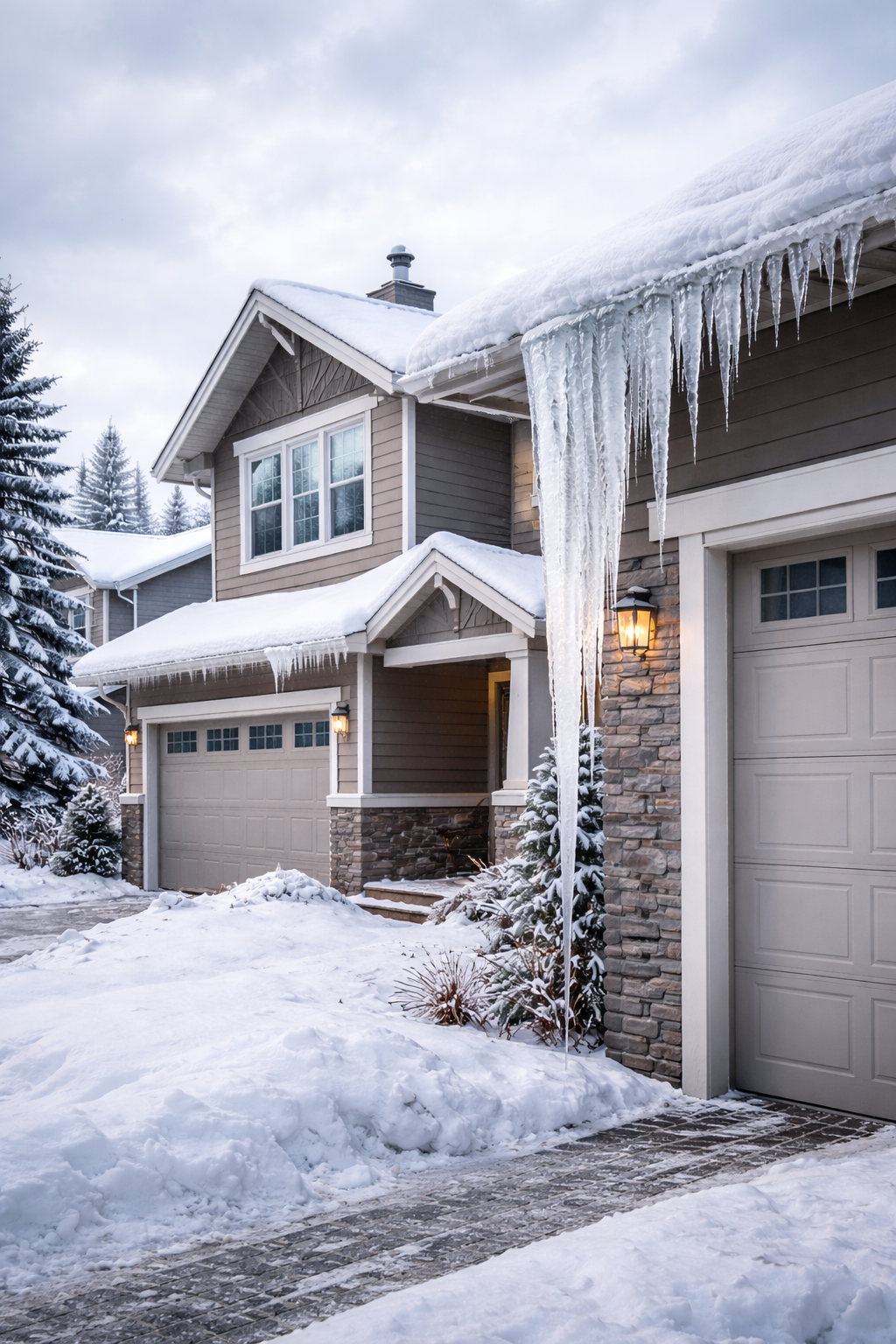
Ice accumulation at roof edges
Thick ice at eaves usually indicates attic heat escaping through insufficient insulation or air sealing. Snow melts above the warm section, flows downward, refreezes at the colder overhang, and gradually forms an ice dam. Once melting resumes, trapped water can back up beneath shingles and enter roof decking.
Uneven snow melt patterns
Consistent roof temperatures produce even snow coverage. Patchy melting typically means inconsistent attic insulation, compressed insulation, or air leakage from ceiling penetrations.
Icicles forming from soffits or fascia
This often points to condensation inside soffit cavities or roof edge leakage, not just exterior meltwater.
New cracks in stucco, masonry, or siding
Freeze-thaw cycles expand trapped moisture inside small surface cracks. Over winter, these openings can widen enough to allow bulk water intrusion during spring rains.
Downspouts frozen or ice-blocked
When meltwater cannot drain away, it may overflow near the foundation, increasing soil moisture and hydrostatic pressure against basement walls.
Heating Performance & Indoor Air
Furnace running longer or more frequently
Cold snaps in Calgary can cause the furnace to run for longer periods of time. But extended run cycles can indicate increased heat loss through the building envelope rather than furnace failure. Common causes include attic bypasses, degraded weather-stripping, or settlement of loose-fill insulation.
Persistent cold zones in specific rooms
Temperature differences greater than 3–4°C between rooms can reflect insulation gaps, thermal bridging through framing, air leakage around window and door frames, or improper airflow.
Low indoor humidity or excessive static
Winter heating can dry interior air. However, extremely low humidity may indicate an undersized or non-functioning humidifier, while excessively high humidity often leads to window condensation and attic moisture accumulation.
Interior window condensation or frost
This occurs when warm, moist indoor air meets cold glass surfaces. Frequent condensation suggests either high indoor humidity levels, poor window insulating performance, or inadequate ventilation in moisture-producing areas. Cooking, frequent showers, and other high humidity producing activities can all contribute to condensation or frosting issues.
Left unresolved, this moisture can degrade window frames, drywall edges, and paint finishes.
Plumbing & Water System Indicators
Intermittent low water pressure
May indicate partial freezing in vulnerable pipe sections located near exterior walls or unheated spaces.
Whistling or banging pipes
Rapid valve closure, frozen segments, or fluctuating line pressure can cause vibration or water hammer effects.
Ceiling or wall staining near vent stacks
If inadequately vented, warm moist air traveling through plumbing vents can condense in cold attic spaces and drip back down, leaving subtle stains before major leaks appear.
Structural & Interior Stress Signals
Doors that suddenly bind or stick
Frozen soil expansion can apply lateral pressure to foundation walls, causing slight frame distortions that show up as sticking interior doors.
New or widening drywall cracks
Minor seasonal cracking is common. Cracks that lengthen, widen, or appear in stair-step patterns near corners may indicate foundation movement during deep freeze.
Floor slope changes or new floor squeaks
Thermal contraction of framing members and subfloor moisture changes can produce movement. Sudden or localized changes should be monitored.
Small ceiling discoloration
Early moisture entry from roof decking or attic condensation (can be called attic rain) often appears as faint yellowing before structural damage occurs.
Ventilation & Safety Systems
Snow buildup around furnace, dryer, or HRV vents
Blocked exhausts reduce combustion efficiency and can allow carbon monoxide buildup.
Fireplace draft changes
Smoke spill-back or downdrafts can indicate ice or snow obstruction at chimney caps, or pressure imbalance in tightly sealed homes.
Carbon monoxide detector alerts or nuisance alarms
Never ignore CO alarms in winter — heating systems are under peak load this time of year.
A Practical Rule of Thumb
If something in your home appears new, persistent, or worsening, it is worth noting.
Major building failures rarely happen without warning — winter simply makes the early signs easier to see.
Looking Ahead
Late winter is an ideal time to plan attic inspections, roof servicing, furnace maintenance, and spring exterior work before contractor schedules fill up. Once thaw begins, small winter issues can accelerate quickly — especially moisture-related problems.
Being aware of early warning signs now allows homeowners to address concerns on their timeline, rather than during emergency repairs later.
Mid-Winter Recap
Winter doesn’t usually create sudden home problems — it reveals them. Drafts, window condensation, ceiling discoloration, ice buildup, plumbing noises, or sticking doors are often the first visible clues that something needs attention. Catching these signs early can prevent more costly damage once spring melt arrives.
A simple mid-winter check-in keeps your home protected, comfortable, and ready for the seasons ahead.
Questions or Concerns?
If you’re unsure whether something you’re noticing is normal seasonal behaviour or worth further attention, it never hurts to ask. I’m always happy to help point you in the right direction or connect you with the appropriate professionals if needed.

Clint Nogier is a licensed REALTOR® with eXp Realty, helping Calgary and area families buy and sell homes with confidence — even through Alberta winters.
Disclaimer: These tips are shared as general homeowner suggestions for Calgary’s winter season. I’m a licensed REALTOR®, not a home inspector, service technician, or contractor. Every home is unique, and some situations may require specialized expertise. If you’re unsure about any of these steps, I encourage you to connect with a qualified professional — and you can always reach out to me if you’d like suggestions on who to call.
Categories
Recent Posts