

The Timing of a Real Estate Transaction: Offers, Conditions, Closing Dates & Planning Backwards

For many first-time homebuyers, the most stressful part of buying a home isn’t the price — it’s the timing.
Dates, deadlines, closing days, lawyers, lenders, movers — it can feel overwhelming very quickly. And while buyers often look for a “standard” real estate timeline, the reality is simpler and more important than that:
Real estate timelines are negotiated, not assigned — and they only work when all parties are given adequate time to complete their part of the transaction.
Every purchase is built around the specific goals, circumstances, and constraints of the client, and no two transactions unfold the exact same way.
Understanding how the process typically flows — and how to plan backwards from key dates — can make the entire experience more predictable and significantly improve the chances of a successful closing.
The Big Picture: A Typical Real Estate Timeline
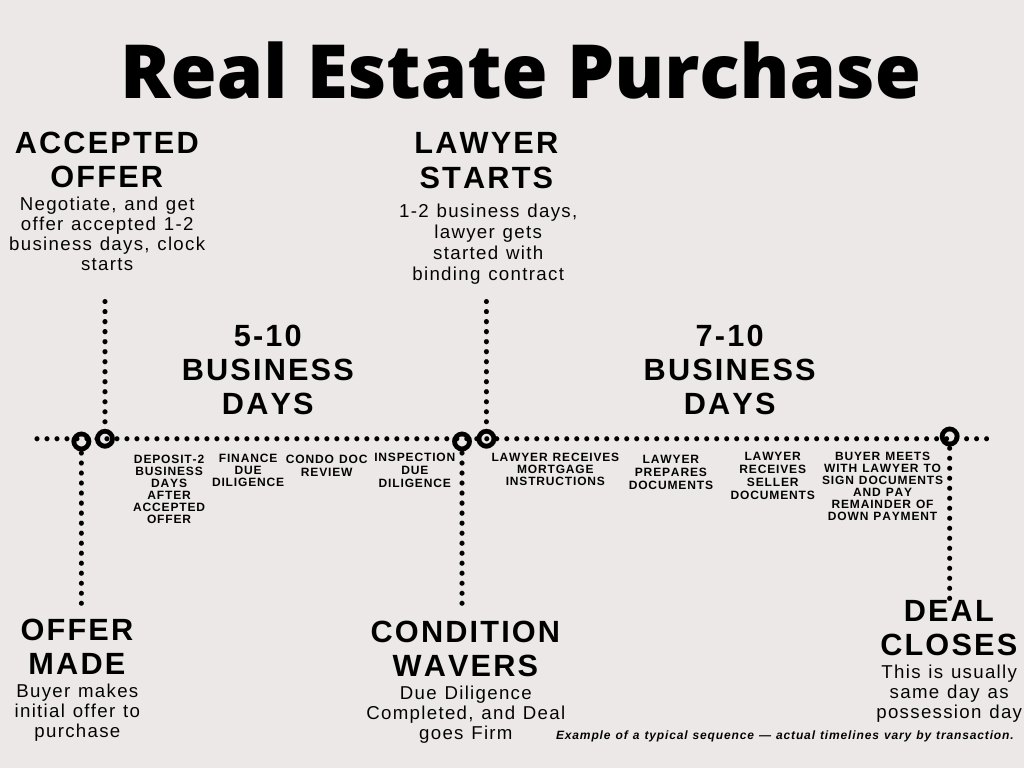
While every transaction is different, a typical Calgary and area purchase often follows this general sequence:
-
Offer is made
-
Offer is negotiated and accepted, often within 1–2 business days
-
Deposit is due, usually within 2 business days of acceptance
-
Condition period begins, commonly ranging from several to ten business days
-
Conditions are satisfied and waived, and the deal becomes firm
-
Lawyers and lenders complete their work, including mortgage instructions and document preparation
-
The transaction closes
It’s important to understand that:
-
These timelines are guidelines, not rules
-
Dates are often discussed in advance with the cooperating REALTOR®
-
All key deadlines are negotiated and written directly into the purchase agreement
The structure provides predictability, but the details are always tailored to the situation.
Offers and Conditions: Where the Clock Really Starts

Once an offer is accepted, the most important period begins: the condition period.
An offer can include conditions, including — but not limited to:
-
Financing approval
-
Home inspection
-
Review of condominium documents (when applicable)
-
Insurance confirmation
-
Sale of the buyer’s existing property
-
Pet approval or other property-specific requirements
There can be many different types of conditions, depending on the property and the buyer’s needs.
What matters most is that:
-
All conditions come with a hard deadline
-
That deadline is negotiated and written into the contract
-
If conditions are not satisfied and waived by that deadline, the deal does not proceed
This period is where buyers complete their due diligence and confirm they are comfortable moving forward.
When a Deal Becomes Firm
Once conditions are satisfied and waived, the transaction becomes firm and legally binding.
At this stage:
-
Lawyers begin working with a binding contract
-
Mortgage instructions are finalized
-
Legal documentation is prepared
-
Buyers can plan next steps with confidence
This is a major milestone — and it’s also when coordination and timing become increasingly important, as multiple parties are now working toward the same closing date.
Deal Closing
Closing is the date written into the contract and represents the point at which ownership transfers.
In Alberta:
-
Title registration takes time, and land title processing has been slower than normal
-
Funds must move between lenders, lawyers, and sellers
-
Documentation must be completed and registered before the transaction can conclude
Adequate time is critical.
For example, while a buyer may have a mortgage pre-approval early on, final mortgage instructions cannot be issued until the lender has completed all required underwriting and documentation steps. If timelines are too tight, delays can occur — even when everyone involved is acting properly.
Clear communication and realistic scheduling help reduce that risk.
Why the Closing Date Deserves More Attention
The closing date is the anchor point for the entire transaction.
It affects:
-
How much time both sides have to complete legal and financial work
-
When funds must be ready and transferred
-
When movers, utilities, and insurance arrangements can be finalized
-
How the purchase coordinates with a sale, lease, or rental situation

It’s also important to remember:
-
There are usually two sides to every transaction
-
You do not control the other party’s timelines
-
Both sides need adequate time to complete their obligations for a successful closing
A well-chosen closing date gives the transaction the space it needs to complete properly.
Planning Backwards: A Practical Way to Think About Timing
Rather than thinking forward from the offer date, many successful buyers plan backwards from the closing date.
For example:
-
Selecting a closing date that fits work schedules, school timing, or lease endings
-
Ensuring lawyers have sufficient time to prepare and register documents
-
Allowing lenders time to issue and process mortgage instructions
-
Structuring condition deadlines to support the overall timeline
This approach reduces last-minute pressure and helps keep the transaction on track.
Why Timing Guidance Matters
Timing decisions can materially affect how smoothly a transaction progresses.
Good guidance helps ensure:
-
Adequate time for all parties to complete their work
-
Fewer avoidable delays
-
A successful closing aligned with your goals, whether speed, certainty, or flexibility is the priority
Speed can absolutely be achieved when required — but it should be intentional, not forced by unrealistic timelines.

Final Thought
Buying a home isn’t about following a fixed script. It’s about making informed decisions that fit your situation.
Timelines provide structure, but every client’s goals are different, and thoughtful planning increases the likelihood of a successful, on-time closing.
Understanding timing early — and planning accordingly — can significantly improve the outcome.
Written by Clint Nogier, REALTOR®
Atkinson Team eXp Realty

This article is intended for general information purposes only. Real estate timelines, requirements, and processes vary by transaction, property type, and individual circumstances. Buyers and sellers should always seek advice specific to their situation.
Categories
Recent Posts